The Future of Cosmetics Is Changing… Five Major Trends Set to Shake Up the Global Market
K-beauty has entered a new turning point. The Korean cosmetics industry, which grew on the foundation of Hallyu and social media, is now expected to be reorganized around skin science, artificial intelligence (AI), personalized care, and competition in global distribution. 2027 is likely to be a period when these changes go beyond individual product trends and reshape the competitive structure of the industry. Korean cosmetics have captured the attention of global consumers based on rapid product development, reasonable prices, and diverse formulations and ingredients. However, as competition in the global market intensifies, simply applying new ingredients or going viral online is no longer enough to guarantee sustainable growth. What matters now is efficacy that consumers can feel, the scientific credibility of products, data-based customer management, and distribution strategies tailored to local markets.
There are five key keywords for the 2027 K-beauty market outlook.
The first change is a shift in the concept of skin aging care. While the existing anti-aging market focused on visible signs of aging such as wrinkle improvement and elasticity recovery, Skin Longevity focuses on an approach that manages the skin barrier, hydration, and skin condition over the long term. As interest in aging populations and health management grows, consumer demand is likely to expand from simply making skin look beautiful to maintaining it in a healthy state. This change presents new opportunities for cosmetics companies. Basic skincare products that can be used every day and continuous skin care programs can secure competitiveness over products that rely on temporary usage experiences. However, the name Skin Longevity alone does not prove product effectiveness. Scientific evidence that consumers can trust and accurate efficacy labeling are expected to become the core of brand competitiveness.
From Ingredient Competition to Skin Science Competition
The second trend is the evolution of derma cosmetics and high-performance cosmetics. K-beauty, which drew global consumer attention with cica and fermented ingredients, is now expanding its competitive scope to skin barrier care, high-performance raw materials, and specialized formulations. The growing attention on products using new ingredients such as PDRN is also part of this trend. However, the popularity of a specific ingredient does not mean that all related products have the same efficacy. In 2027, the quality of raw materials, formulation technology, stability, and data supporting the efficacy of actual products are expected to become more important than marketing that emphasizes ingredient names. In this process, the role of domestic cosmetics original development manufacturing (ODM) companies may also grow. Their capabilities linking raw material exploration, formulation development, and production can determine how quickly brands launch new products and how competitively they maintain quality. Going forward, the standard of competition may not only be which ingredient is used, but also how that ingredient is blended and stabilized, and how it is implemented as a product that consumers can truly experience.
AI-Driven Beauty Consumption… The Rise of the Hyper-Personalized Market
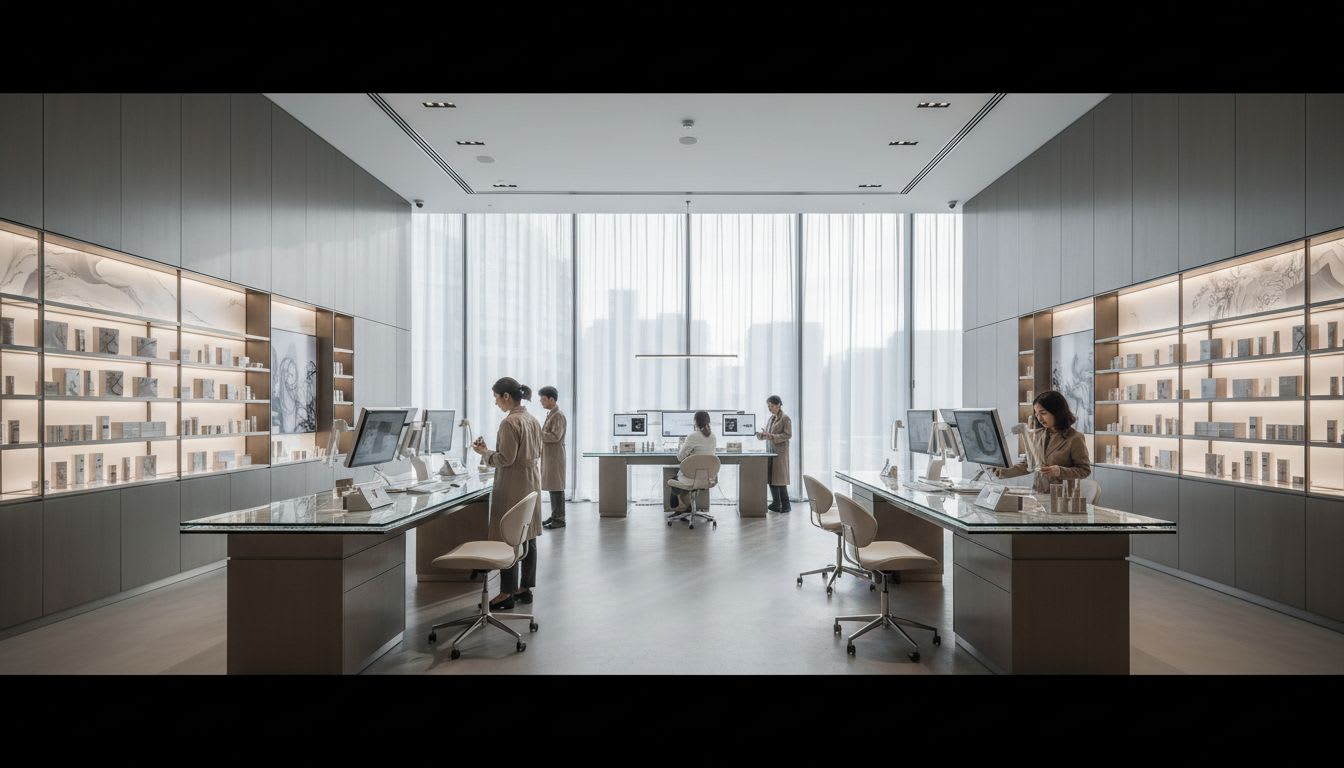
The third trend is personalized beauty powered by AI. The existing cosmetics market has sold products by categorizing consumers based on age, skin type, and similar criteria. As AI and skin analysis technologies advance, companies can use consumer skin conditions, product usage history, living environments, and other data to recommend more segmented products and care methods. For example, services can recommend products based on skin analysis results and adjust care routines by reflecting consumer usage experiences and feedback. From a corporate perspective, this offers the advantage of building continuous relationships with consumers even after product sales. It may also improve product planning, inventory management, and marketing efficiency by using customer data. However, products recommended by AI are not suitable for every consumer. Companies must secure analysis accuracy, personal information protection, and algorithm reliability. AI is significant because it is not a technology that replaces cosmetics, but a foundational technology that changes the way products are developed and customers are managed.
From the Face to the Scalp and Hair… The Expansion of the Beauty Market
The fourth trend is the growth potential of the hair and scalp care market. K-beauty has built recognition in the global market mainly around skincare. Going forward, this competitiveness can be expanded into scalp care, damaged hair care, hair serums, functional shampoos, and more. The ability to apply research and development capabilities accumulated in skin barrier, hydration, and formulation development to hair care is also an opportunity. In particular, scalp care products can encourage daily use and repeat purchases. Building an integrated care product lineup that connects skincare and hair care can also become a strategy to increase revenue per consumer. However, many strong brands already exist in the global hair care market. For Korean companies to secure competitiveness in this new market, they must secure not only product differentiation, but also pricing, local distribution, and brand awareness.
From Social Media Virality to Global Brand Competition
The fifth trend is a change in the way companies enter overseas markets. Social media and influencer marketing played an important role in helping K-beauty become quickly known to overseas consumers. However, products that gain attention online do not necessarily lead to long-term sales and profits. When advertising costs, platform fees, discount costs, logistics costs, and other expenses are considered, profitability can be low even with high sales volume. In 2027, strategies that localize products, pricing, and marketing in line with consumer characteristics and distribution structures in major markets such as the United States, Europe, and Japan are expected to become important. Companies that comprehensively manage overseas distribution networks, stable supply capabilities, consumer repurchase rates, and brand trust are more likely to secure long-term competitiveness. The next phase of K-beauty competition depends less on how many countries a brand has entered and more on how sustainably it can generate profits in overseas markets.
The winners of 2027 will be companies that connect trends, and these five trends are interconnected. Interest in skin health expands demand for high-performance products, while skin science provides the basis for product differentiation. AI advances consumer analysis and product recommendations, while hair and scalp care create new growth markets. Global distribution capabilities connect these products with consumers around the world. This shows that the competitiveness of the K-beauty industry may shift from simple product planning or marketing toward combining research and development, manufacturing, data, and distribution.
Of course, trends do not immediately guarantee overall market growth or improved corporate profitability. Intensifying global competition, regulatory changes, and rising marketing costs remain challenges that must be overcome. The core of K-beauty in 2027 is not merely keeping up quickly with trends, but creating products and brands that consumers can trust and purchase repeatedly.
For K-beauty to take another leap forward in the global market, it must evolve beyond 'cosmetics made in Korea' into 'beauty solutions chosen by consumers around the world'.
The 2027 K-beauty market, which will be reorganized around Skin Longevity, derma cosmetics, AI hyper-personalization, hair care, and global platforms, is no longer seeking one-off products sensitive to trends, but a path of scientific and sustainable growth chosen by consumers based on technology and data.
The makeup trends of 2027 will evolve beyond simple trends into a more sophisticated form based on scientific reliability and hyper-personalized skin solutions. Amid this flow of change, Yuricos will work together to create a future-oriented beauty experience that consumers can trust through outstanding technology and data-based expertise.

