Foundation-Free Base Embraces Skincare
· Hybrid base trend stands out…focus on formula diversification and ingredient evolution
Foundation-free makeup, which pares back thick and artificial foundation while naturally enhancing the skin’s own texture, is emerging as a key category in the global beauty market. Base products that once stopped at simple UV protection or temporary tone correction are now evolving into skincare-infused hybrids that combine a wide range of high-performance skincare ingredients, rapidly expanding the category’s reach.
A global beauty trend analysis platform analyzed market data from Korea and the United States from November 2025 to April 2026 and identified a rapid rise in demand for hybrid base products. Korean beauty brands, backed by unrivaled formulation technology and distinctive ingredient blending know-how, are leading this paradigm shift. After securing a strong position in the domestic market, they are also expanding their presence by demonstrating powerful influence across the highly selective U.S. retail network.
Diversification of Ultra-Adherent Formulas
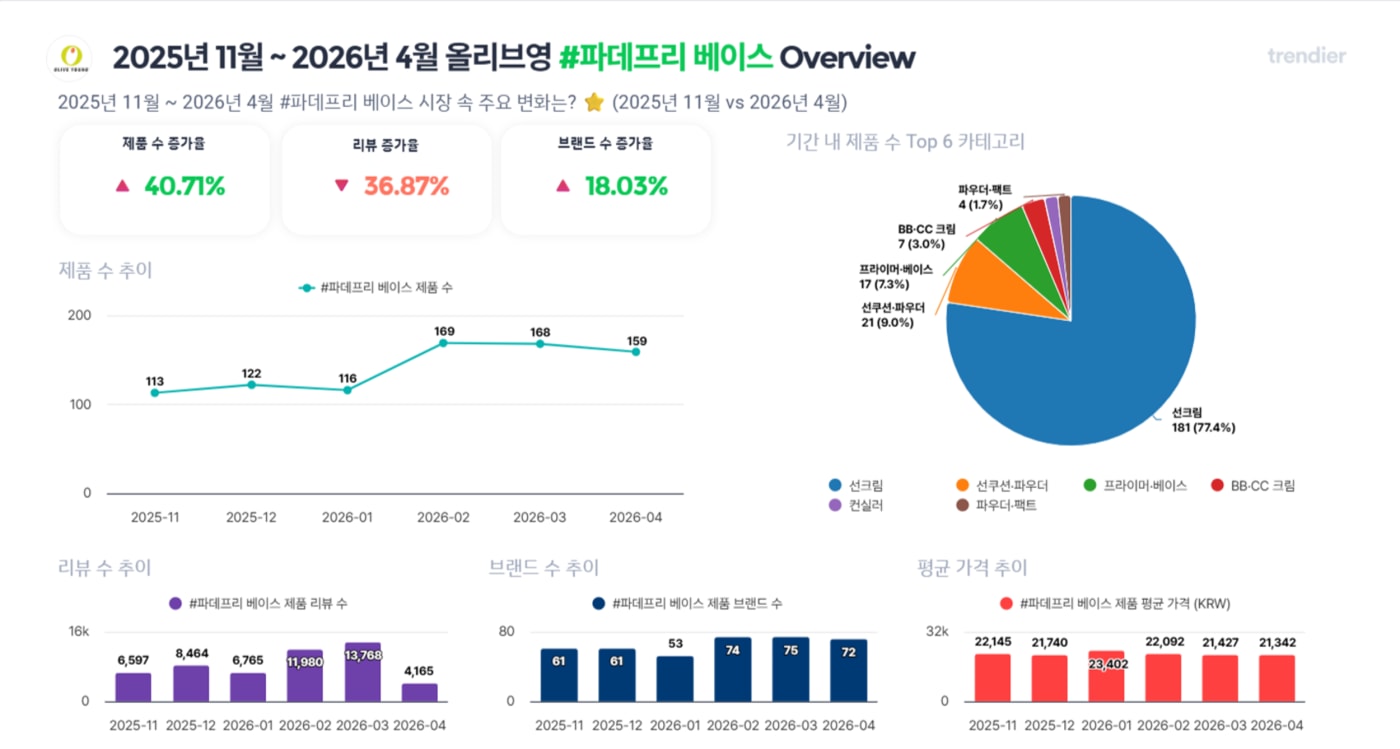
The Korean foundation-free base market has achieved steep growth in both quality and quantity through new product launches tailored to segmented consumer needs and diversification of formulas. Data from major domestic health and beauty H&B stores shows that the category has expanded significantly, with the number of products increasing by more than 40 percent in a short period. Related brands also recorded double-digit growth, making this category one of the fiercest battlegrounds in the beauty market this summer.
The dramatic comeback of BB and CC creams is especially noteworthy. Moving away from the heavy and dull textures of the past, they have evolved into new-concept formulas that maximize skincare benefits, resulting in a sharp increase in reviews. In contrast, the concealer segment has shown a slight downward stabilization, indicating that many consumers prefer natural makeup that brightens and clarifies the overall skin tone rather than artificial, heavy coverage.
For Korean consumers, ingredients and efficacy are the top priorities when choosing a base product. An in-depth analysis of key keywords among popular products found that high-performance skincare ingredients dominated the top rankings, led by hyaluronic acid, a symbol of hydration, along with niacinamide and tocopherol, known for brightening and strengthening the skin barrier. From a marketing perspective, keywords such as non-sticky adherence and clinical testing that adds objective credibility also gained prominence.
Rising keywords reveal consumers’ detailed needs. During the research period, keywords such as liposome, lifting, and fast absorption surged in Korea. This was driven by a growing number of customers seeking to maximize the absorption of active ingredients through liposome technology or create firm, radiant skin texture with a lifting effect. Color-related keywords such as summer cool tone and light purple also drew attention. Products that precisely correct yellow undertones with tailored colors or adapt to the wearer’s skin tone generated strong market response. One functional beauty brand was identified as the brand that drew the most response across both H&B stores and major portal shopping platforms. In H&B stores, naturalist brands and dermocosmetic brands followed, while on portal shopping platforms, various indie beauty brands ranked from second to fifth.
Clean Ingredients and Anti-Aging in North American Retail Networks
In the United States as well, the foundation-free base landscape is rapidly shifting toward skincare. A look at trends from major U.S. beauty specialty retailers shows that while the total number of products has entered a stabilization phase, consumer attention has concentrated on product groups emphasizing skincare benefits, such as tinted moisturizers, driving category review growth of more than 60 percent during the period.
An analysis of ingredients and marketing keywords resonating with local consumers shows a very strong interest in minimizing skin irritation and ensuring safety. Mineral, zinc, and zinc oxide, which are inorganic sunscreen ingredients that reflect UV rays from the surface rather than being absorbed into the skin, hold a clear advantage in preference. In addition, consumer behavior is clearly spreading toward non-comedogenic formulas that do not clog pores, acne-safe products suitable for acne-prone skin, and talc-free formulas that thoroughly exclude controversial harmful ingredients.
As thin tinted base products with carefully vetted ingredient safety gain popularity, the use of keywords such as hit pan, meaning a product used every day until the bottom of the container shows, and sun-kissed, meaning a healthy bronzed complexion, has increased significantly. The combination of high-performance anti-aging ingredients and base products is also notable. Peptide complex, a rising keyword that recently entered the local market, shows that foundation-free products are gradually expanding their role beyond simple UV protection and moisturization into skincare areas such as wrinkles and elasticity.
Customized Hybrid Solutions for Overseas Market Expansion
North American market demand for both safe ingredients and high functionality is becoming a strong driver for Korean brands expanding overseas. Based on advanced technological capabilities, Korean companies are actively breaking down the entry barriers of the demanding U.S. market by proposing customized solutions that address local consumers’ nuanced skin concerns.
In the foundation-free category of U.S. beauty retailers, where global brand products remain strong, one Korean naturalist brand is receiving positive responses by identifying local consumers’ need for redness correction. Its key driver of localization success is a customized skincare solution that neutralizes redness across diverse ethnicities with a subtle green-toned texture while improving inner dryness with hyaluronic acid and soothing ingredients. Rather than unilaterally exporting formulas used in Korea, the brand succeeded through a smart strategy that responded to the detailed skin concerns of local consumers.
The growth of Korean brands within the foundation-free product category can also be seen on the largest online shopping platform in the United States. A sun care product from a modern hanbang brand that has rapidly risen in the global market entered the upper ranks of new sales rankings with its thin, soft skincare-like application and reliable UV protection. Another brand that emphasizes ingredient-focused beauty made a bold hybrid attempt by incorporating rice-derived PDRN and plant-based collagen into a base product. Highlighting a plumping effect that delivers long-lasting healthy radiance and densely supports skin elasticity, this product quickly rose by satisfying local users seeking an anti-aging skincare base.
Going forward, the global foundation-free makeup market will see intensifying competition around the visual maximization of skincare benefits and rigorous clinical ingredient technology. This is because more consumers want their skin barrier to be protected and intensive anti-aging care to happen simultaneously even while wearing makeup. Technological innovation that goes beyond one-dimensional tone correction, meets the demanding standards of global consumers, and breaks down the boundaries between makeup and skincare will lead the sustainable growth of the beauty industry.
As cosmetic trends that blur the line between makeup and skincare spread rapidly, the value of excellent formulation technology and reliable ingredients is drawing even greater attention. In step with this movement, we will continue to serve as a dependable partner by providing practical and systematic beauty solutions that can lead the global market.

