
15% Tariff on Cosmetics Cross-Border Sales to the US... Applies from August 29
Significant impact on cosmetics cross-border sales due to the US duty-free policy change... Concerns over price increases and sales decline
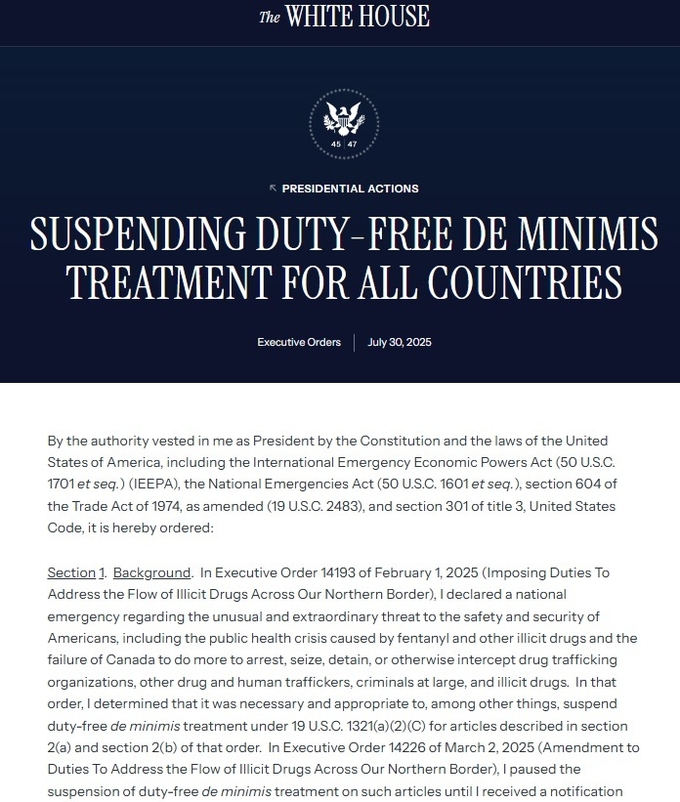
The abolition of the US small package duty-free policy is anticipated to bring significant changes to the cosmetics cross-border sales market. Starting August 29, according to the Eastern US time zone, a 15% reciprocal tariff will be imposed on all small items imported from all countries, which is expected to have a major impact on the cosmetics industry. This change has been prompted by a recent executive order from President Trump.
Abolition of the Small Duty-Free Policy and Its Implications
The US small duty-free policy, which exempted tariffs on imports valued under $800, has been in effect since 2016. However, with its abolition, all carriers must submit tax-related information according to the methods of the US Customs and Border Protection (CBP), and tariff declarations are required to be made via the electronic system, ACE. Notably, a 15% reciprocal tariff rate between the US and Korea was agreed upon on July 31.
This move marks the beginning of the cessation of minimum duty processing, transitioning to applying country-specific reciprocal tariffs on international mail. Accordingly, Korean companies must comply with the strengthened customs regulations when sending small packages to the US from August 29, which vary based on the item's value, type, and country of origin.
Additionally, a fixed tariff applies to package unit products. Depending on the reciprocal tariff rate standard, a specific duty ranging from 80-200 dollars per item is imposed, which can directly affect the final consumer price of the products.
Changes and Concerns in the Cross-Border Market
These policy changes are expected to have a direct impact on the cosmetics cross-border sales market. Although the popularity of K-Beauty products in the US has been steadily rising, leading to expectations of market expansion, the abolition of the duty-free policy foresees inevitable sales declines due to price increases. Some experts predict that this change may also impact the profitability of the cosmetics market.
On the other hand, some opinions suggest that even if K-Beauty's price competitiveness declines, it may still withstand the impact due to factors like quality and brand loyalty. Particularly, since US consumers are already paying attention to the efficacy and diversity of K-Beauty products, some analysts suggest that slight price increases may not significantly affect overall demand.
Furthermore, similar situations were observed with Chinese e-commerce platforms such as Temu and Shein, which experienced a sharp decline in daily users following changes in tariff policies. There are concerns that a similar scenario could affect K-Beauty-related companies. For certain domestic platforms with a high proportion of US sales, these measures could have a short-term impact on their performance.

Additional Considerations
To minimize the impact of the abolition of the small duty-free policy on the cosmetics industry, comprehensive strategies in areas such as product strategy, marketing, and logistics are required. Since maintaining price competitiveness alone has its limits, strengthening premium product lines or developing customized products could be alternatives.
Additionally, instead of passing on the cost increase due to higher tariffs to consumers, strategic responses such as package unit consolidation or expanding warehouse logistics in the US might be considered. Some brands could effectively stabilize their profit structure by focusing on a dedicated customer base leveraging their market presence.
Above all, systematic risk management in response to sudden policy changes and establishing flexible export strategies that can respond to various scenarios is crucial. As e-commerce exports become more complex globally, understanding and preparation for changes in trade environments are essential for cosmetics companies.
In Closing
The abolition of the US small duty-free policy is having a significant impact on the global cosmetics market, and it's time for the industry to consider strategic changes in response. To navigate these environmental changes, each brand needs to lead the market innovatively and seek collaborative growth. Particularly in a rapidly changing international trade environment, establishing efficient and long-term solutions is vital.
Despite the changing tariff environment, YURICO5 offers professional and practical strategies to seek efficient cosmetic solutions. For more detailed guidance, please inquire

